Home / Types / Astronomy binoculars
Binoculars for stargazing
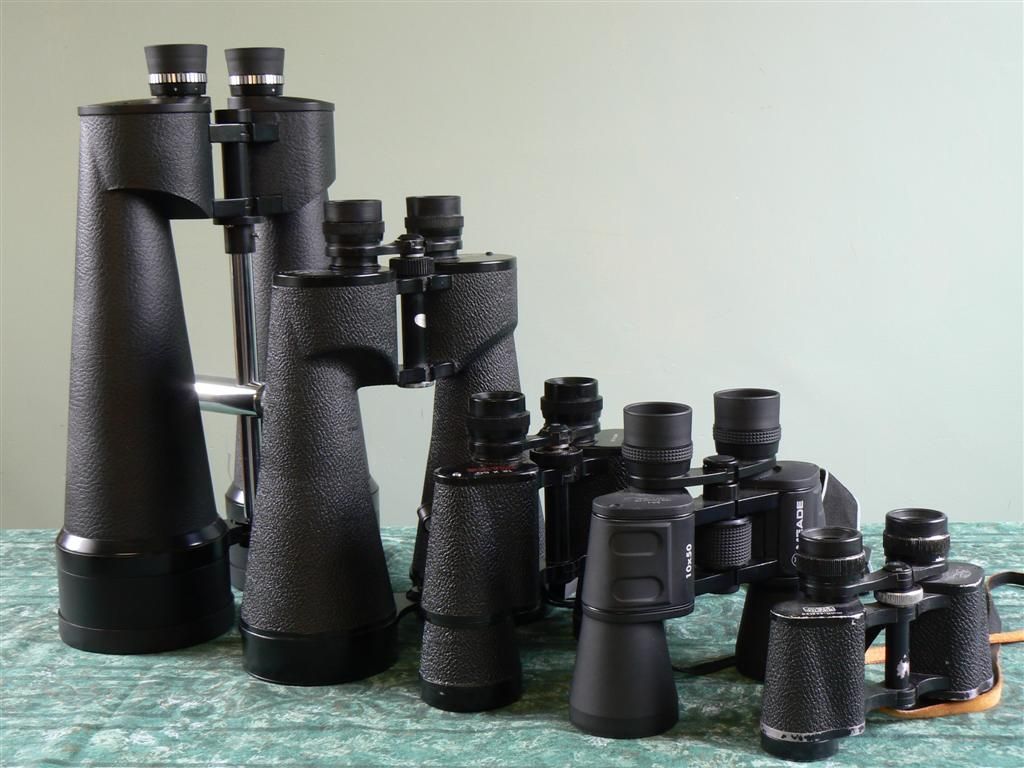
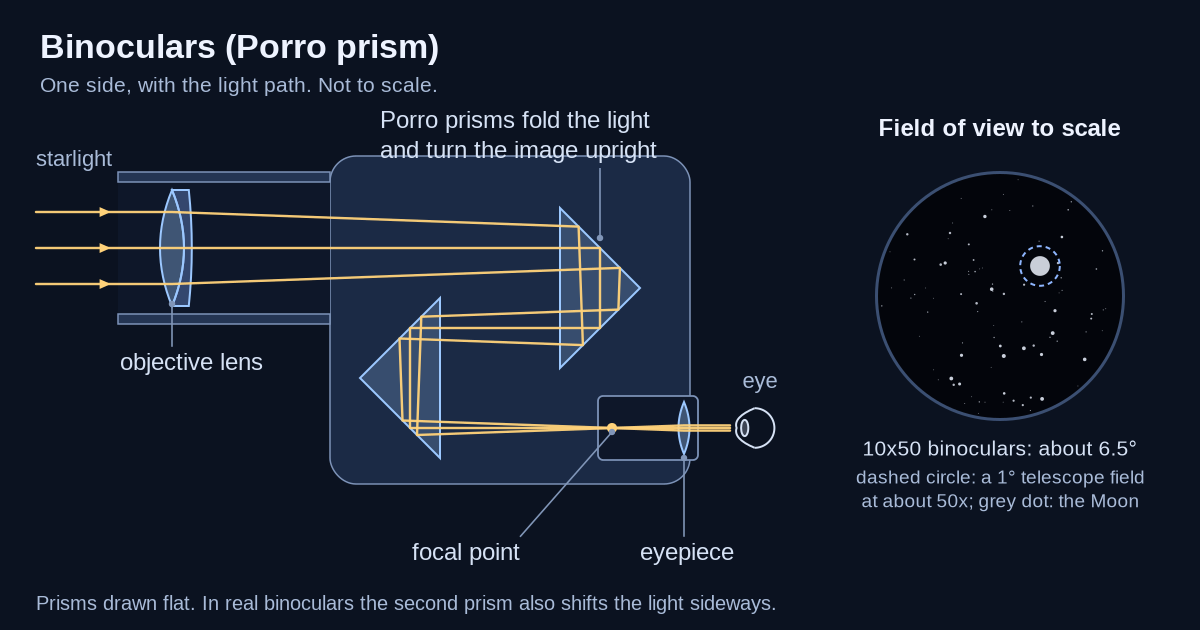
Porro-prism astronomy binoculars gather light with two objective lenses and present a right-side-up view to both eyes. They will not replace a telescope for planets, but they show the Moon, bright clusters, and the wider Milky Way honestly and quickly.
Best for
Tight budgets, travel, apartments, and learning the sky. Try the chooser with a matching preset or open the simulator for this aperture class.
What each aperture shows
A 10x50 pair gives a 5.0 mm exit pupil and typically about 6-7° true field. A 7x50 pair gives a 7.1 mm exit pupil, which matches a young dark-adapted eye but wastes light as pupils shrink with age; many adults prefer 10x50. At 10x, Jupiter is a bright disk without belts you can study, and Saturn's rings are usually not resolved. Dawes limit for 50 mm is about 2.3".
Typical size, weight and setup
A 10x50 Porro pair often weighs near a kilogram. Handholding works for short looks; a tripod adapter and a light tripod steady the view for clusters and the Moon. Roof-prism designs can be slimmer but astronomy-oriented Porro models are common at beginner prices.
Strengths
- Fast setup and easy to share
- Wide true field shows star fields and the Moon in context
- Lowest cost path into real night-sky observing
Limits
- Fixed, modest magnification; planets stay small
- Handheld shake limits detail
- Deep-sky objects that need aperture remain faint or invisible
Who should skip it
Skip binoculars as your only tool if Moon and planet detail is the main goal; a small refractor reaches useful planetary power. Keep binoculars anyway as a wide-field companion.
Accessories you will want
- A neck strap you will actually use
- A tripod adapter for steadier views
- A simple star atlas or phone app used outdoors at night with red light
Questions
Are 10x50 binoculars good for astronomy?
Yes. They are a common first night-sky tool for the Moon, bright clusters, and wide star fields.
7x50 or 10x50?
7x50 has a larger exit pupil; 10x50 shows more detail if you can hold it steady. Many adults prefer 10x50 as pupils shrink with age.
Binoculars vs telescope?
Binoculars win on setup speed and field of view. A telescope wins on planetary magnification and deep-sky aperture.
Calculator · What you can see · All types
Sources
- Sky & Telescope, How to Choose Your First Telescope (retrieved 2026-11-24)
- Tele Vue, Telescope Formulas / Common Telescope Myths (retrieved 2026-11-24)