Telescope mounts and equatorial mounts
Alt-az, Dobsonian, equatorial, and beginner GoTo mounts explained plainly.
A telescope only shows what the mount can hold still. Beginners often buy aperture and then fight a shaky tripod.
Altazimuth and Dobsonian
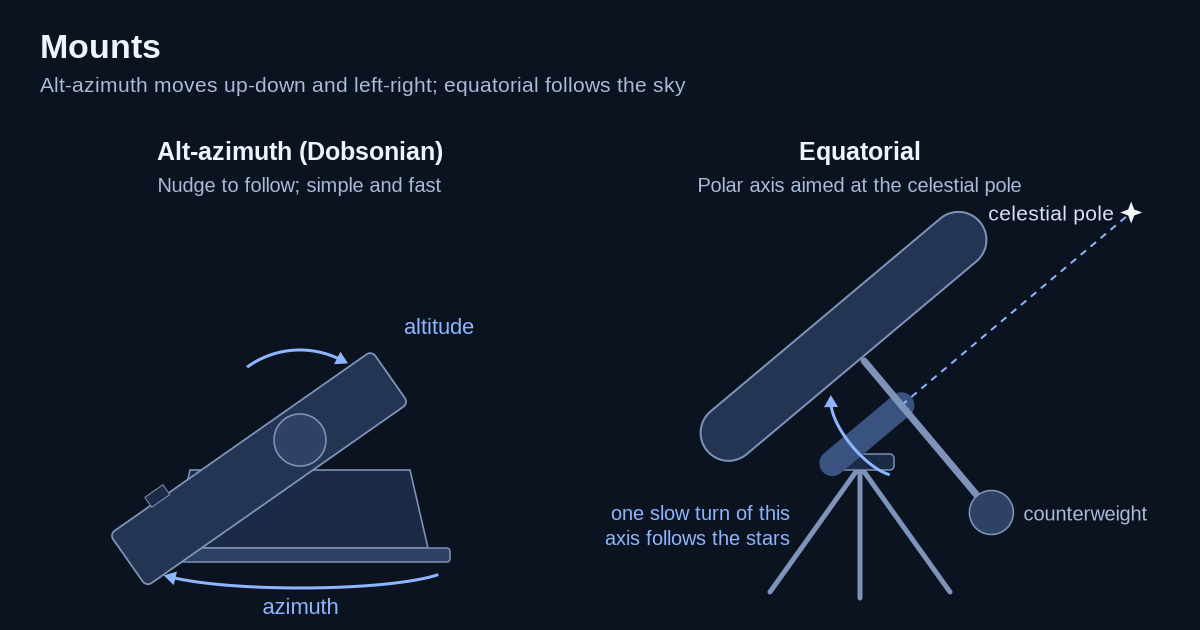
Alt-az mounts move up-down and left-right. A Dobsonian is an alt-az rocker box under a Newtonian tube. Both are intuitive for visual observing. You push the tube to track as the sky drifts.
Many beginner bundles add motors or GoTo computers on alt-az mounts. Tracking keeps a planet centered while you look; GoTo points the tube after a short alignment. Those features help, but a steady mount under a modest optic still beats a shaky GoTo under a frail tripod.
Equatorial mount
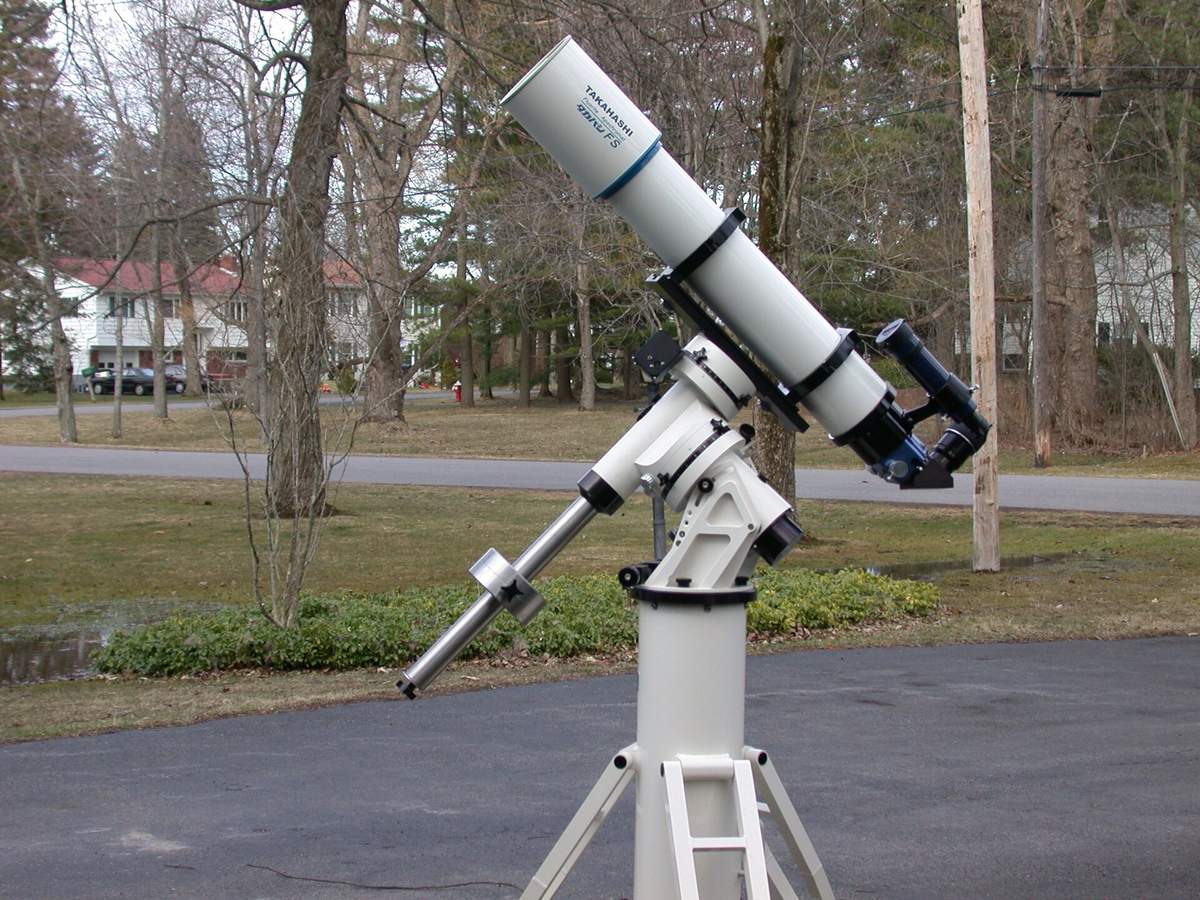
An equatorial mount points one axis at the celestial pole (near Polaris in the northern hemisphere) so a single motion tracks the stars. They help long sessions and photography, but they add setup and weight. Most visual beginners do not need one on night one.
What to avoid
Department-store packages that advertise extreme magnification often put a small tube on a frail tripod. Prefer a steady mount under a modest optic, or start with binoculars.
Match mount style to a type in the telescope chooser.
Questions
Do beginners need an equatorial mount?
No. A steady alt-az or Dobsonian rocker box is easier for visual observing.
Why does the mount matter so much?
A sharp optic on a shaky tripod shows soft, dancing views. Mount quality often limits beginners more than aperture.
Related tools: chooser, simulator, calculator.
Sources
- Sky & Telescope, How to Choose Your First Telescope (mount section) (retrieved 2026-11-24)